 English
 Slovenčina
 Français
 Magyar
Why Teams Are Looking for Jitbit Helpdesk Alternatives

Many support teams are exploring alternatives to Jitbit Helpdesk due to several key limitations:
- Pricing constraints: Jitbit’s pricing structure can become costly as teams scale, especially when compared to more flexible alternatives
- Limited AI automation: While Jitbit offers basic automation, it lacks the advanced AI capabilities found in modern helpdesk solutions
- Omnichannel gaps: Jitbit’s primarily email-focused approach doesn’t fully support the seamless integration of chat, social media, and voice channels that today’s customers expect
- Restrictive deployment options: Though Jitbit offers both cloud and on-premise solutions, some teams need more flexible implementation choices
Today’s support teams need comprehensive solutions that combine AI-powered automation, unified communication channels, and scalable pricing to deliver exceptional customer service.
What to Look for in a Modern Jitbit Helpdesk Alternative

When evaluating Jitbit alternatives, consider these essential features that modern helpdesk platforms should offer:
- AI chatbots and automation: Look for solutions with built-in AI capabilities that can handle routine inquiries, suggest responses, and streamline workflows
- Unified inbox: The ability to manage emails, live chat, social media messages, and phone calls from a single interface
- No-code workflows: Intuitive automation tools that don’t require technical expertise to configure
- Comprehensive analytics: Robust reporting capabilities that provide actionable insights into support performance
- Flexible integrations: Seamless connections with your existing tech stack, including CRM, e-commerce platforms, and collaboration tools
How to Compare Jitbit Helpdesk Alternatives

To make an informed decision, evaluate potential Jitbit alternatives across these critical dimensions:
- Ticketing capabilities: How robust is the ticketing system? Does it support custom fields, automation rules, and SLA management?
- SLA management: Can the platform track and enforce service level agreements effectively?
- Asset management: Does it include tools for tracking hardware, software, and other assets?
- Deployment options: Is the solution available in cloud, on-premise, or hybrid configurations?
- Security and compliance: What security measures and compliance certifications are in place?
- Scalability: Can the platform grow with your business, especially if you’re an SMB or e-commerce operation?
Free vs. Paid Jitbit Alternatives: Understanding the Trade-offs

Many helpdesk vendors offer free tiers alongside paid plans, but it’s important to understand what you’re getting:
- Free tier limitations: Most free plans restrict the number of agents, tickets, or features
- Hidden costs: Some “free” solutions may require paid add-ons for essential functionality
- Total cost of ownership: Consider implementation, training, and maintenance costs alongside subscription fees
Let’s explore the top 10 Jitbit alternatives, starting with Talkees, an AI-first solution that addresses many of Jitbit’s limitations.
Talkees vs Jitbit: AI-First Omnichannel Help Desk with Native Chatbot

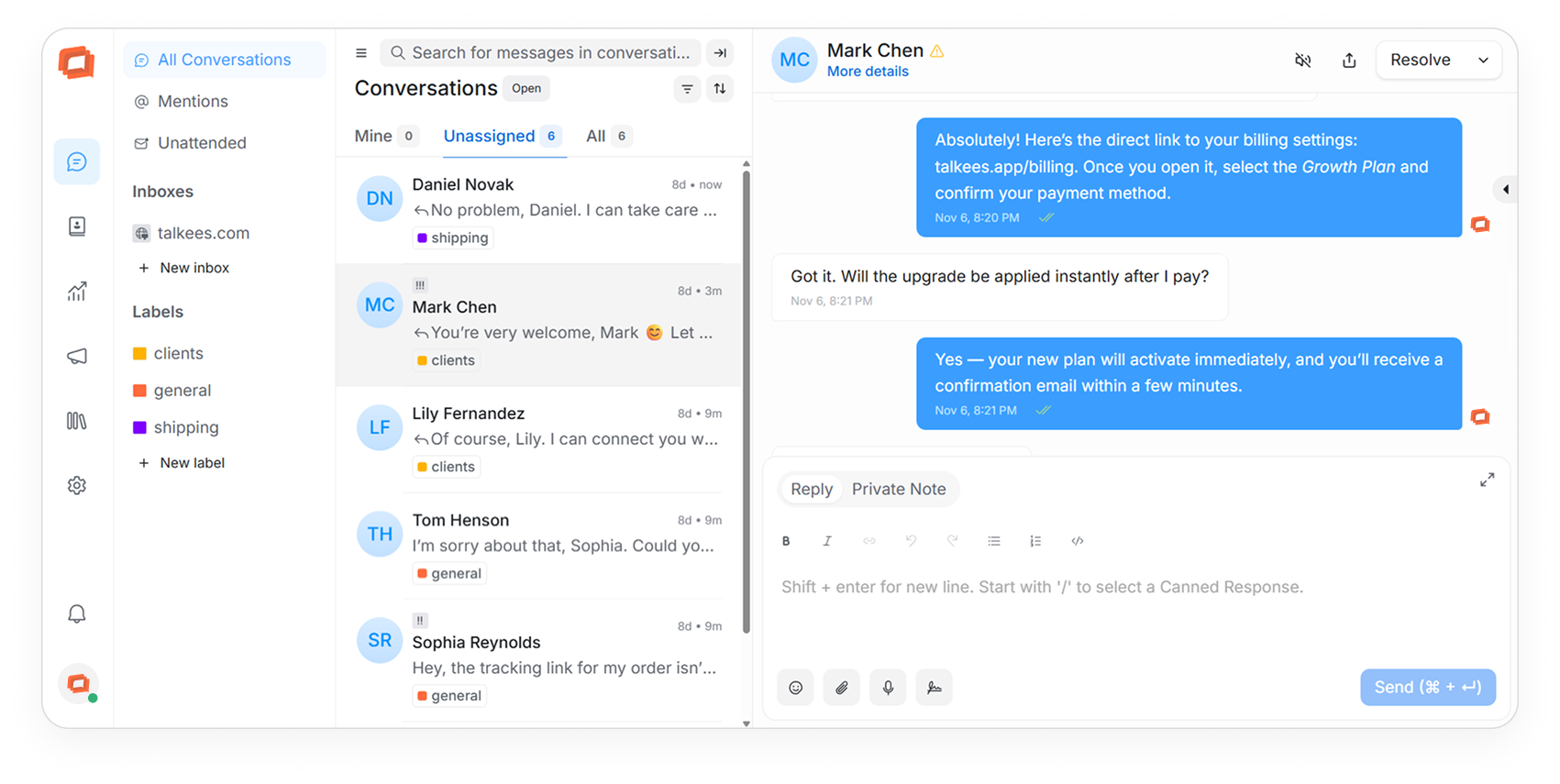
Talkees stands out as a leading Jitbit alternative, offering an AI-first approach to customer support with a comprehensive set of features designed for modern businesses.
Detailed Pricing Overview
Talkees pricing structure:
- Free plan: Includes basic ticketing, knowledge base, and limited AI features for small teams
- Standard: $29/agent/month – Adds advanced automation, full omnichannel support, and expanded AI capabilities
- Professional: $49/agent/month – Includes all Standard features plus advanced analytics, custom workflows, and premium integrations
- Enterprise: Custom pricing – Offers dedicated support, custom AI training, and enterprise-grade security features
- AI credits: Pay-as-you-go option for AI usage beyond plan limits
The flexible pricing model allows businesses to scale their support operations without the steep cost increases often associated with Jitbit’s pricing tiers.
Complete Features List
Core capabilities:
- AI-powered chatbot with natural language understanding
- Unified inbox for emails, live chat, social media, and voice communications
- Automated ticket routing and prioritization
- Customizable knowledge base with AI-suggested articles
- No-code workflow builder for complex automation sequences
- Real-time analytics and performance dashboards
- Native integrations with popular CRM, e-commerce, and collaboration tools
- Mobile apps for iOS and Android
- Multilingual support with automatic translation
How Talkees differs from Jitbit:
- Native AI chatbot (vs. Jitbit’s limited automation)
- Truly unified omnichannel experience (vs. Jitbit’s email-centric approach)
- More intuitive interface requiring less technical knowledge
- Faster implementation and time-to-value
- More flexible pricing structure for growing teams
User Experiences and Reviews
Customers consistently praise Talkees for its:
- Intuitive interface that requires minimal training
- Effective AI chatbot that genuinely reduces ticket volume
- Responsive support team and comprehensive documentation
- Seamless integration with existing tools
From G2 reviews: “Talkees transformed our support operations by automating 40% of routine inquiries and providing a unified view of all customer interactions.”
From Capterra: “The AI capabilities are impressive – it actually understands customer intent and provides relevant responses, unlike other chatbots we’ve tried.”
Advantages and Disadvantages
Advantages:
- True omnichannel support with unified conversation history
- Powerful AI chatbot that continuously improves
- Intuitive interface with minimal learning curve
- Flexible pricing that scales with your business
- Excellent customer support and documentation
- Rapid implementation (typically under 2 weeks)
Disadvantages:
- Newer platform compared to some established competitors
- Advanced customization may require Professional or Enterprise plans
- On-premise deployment not currently available
- Some integrations still in development
Our Subjective Assessment
After testing Talkees extensively, we were particularly impressed by how quickly the AI chatbot adapted to our knowledge base and started providing accurate responses. The unified inbox truly delivers on the promise of omnichannel support, maintaining context even when conversations move between channels.
The implementation process was remarkably smooth – we were up and running within days, not weeks. The interface strikes an excellent balance between simplicity and power, making it accessible to non-technical team members while providing the depth needed for complex support scenarios.
What surprised us most was the accuracy of the AI-suggested responses for agents. Rather than generic templates, the system provides contextually relevant suggestions that agents can quickly customize, significantly reducing response time.
For businesses frustrated by Jitbit’s limited automation and channel support, Talkees represents a compelling alternative that delivers modern AI capabilities without overwhelming complexity.
Zendesk as a Jitbit Competitor: Enterprise-Grade Channels and Marketplace Depth

Zendesk is a well-established player in the customer service space, offering a comprehensive suite of support tools.
Detailed Pricing Overview
Zendesk pricing structure:
- Suite Team: $49/agent/month – Basic omnichannel support
- Suite Growth: $79/agent/month – Adds advanced workflows and reporting
- Suite Professional: $99/agent/month – Includes AI capabilities and advanced analytics
- Suite Enterprise: $150/agent/month – Enterprise-grade security and support
- Add-ons: Additional costs for AI features, advanced voice capabilities, and specialized integrations
While Zendesk offers powerful features, its pricing structure can be significantly higher than both Jitbit and Talkees, especially when adding necessary functionality through add-ons.
Complete Features List
Core capabilities:
- Ticketing system with custom fields and workflows
- Omnichannel support (email, chat, voice, social media)
- Knowledge base and community forums
- Reporting and analytics
- Marketplace with 1,000+ integrations
- Automation rules and macros
- Mobile applications
How Zendesk differs from Jitbit:
- More comprehensive omnichannel capabilities
- Larger marketplace of integrations
- More advanced reporting tools
- AI capabilities (at higher price points)
- No on-premise option (cloud-only)
User Experiences and Reviews
Zendesk users appreciate:
- The extensive integration ecosystem
- Comprehensive ticketing capabilities
- Robust reporting options
However, many note:
- Steep learning curve for configuration
- High costs, especially with necessary add-ons
- Sometimes overwhelming complexity
From G2: “Zendesk offers everything we need, but the cost adds up quickly when you need to add specialized features.”
From Trustpilot: “Powerful platform but requires significant time investment to configure properly.”
Advantages and Disadvantages
Advantages:
- Comprehensive feature set for enterprise needs
- Extensive marketplace of integrations
- Robust reporting and analytics
- Established vendor with proven track record
- Strong community and documentation
Disadvantages:
- Significantly higher cost than many alternatives
- Complex implementation and configuration
- No on-premise deployment option
- Can be overwhelming for smaller teams
- Add-on pricing model increases total cost
Our Subjective Assessment
When testing Zendesk, we found it to be exceptionally powerful but often more complex than necessary for many support teams. The platform offers virtually every feature imaginable, but this comes at the cost of simplicity and often requires dedicated administrators.
The implementation process took significantly longer than with Talkees, requiring several weeks of configuration and training. While the end result was impressive, the journey was resource-intensive.
For large enterprises with complex support requirements and dedicated admin resources, Zendesk can be an excellent choice. However, for most SMBs and e-commerce operations looking for a Jitbit alternative, the combination of high costs and complexity may be prohibitive compared to more streamlined solutions like Talkees.
Freshdesk as a Jitbit Alternative: Free Plan and Scalable Automations
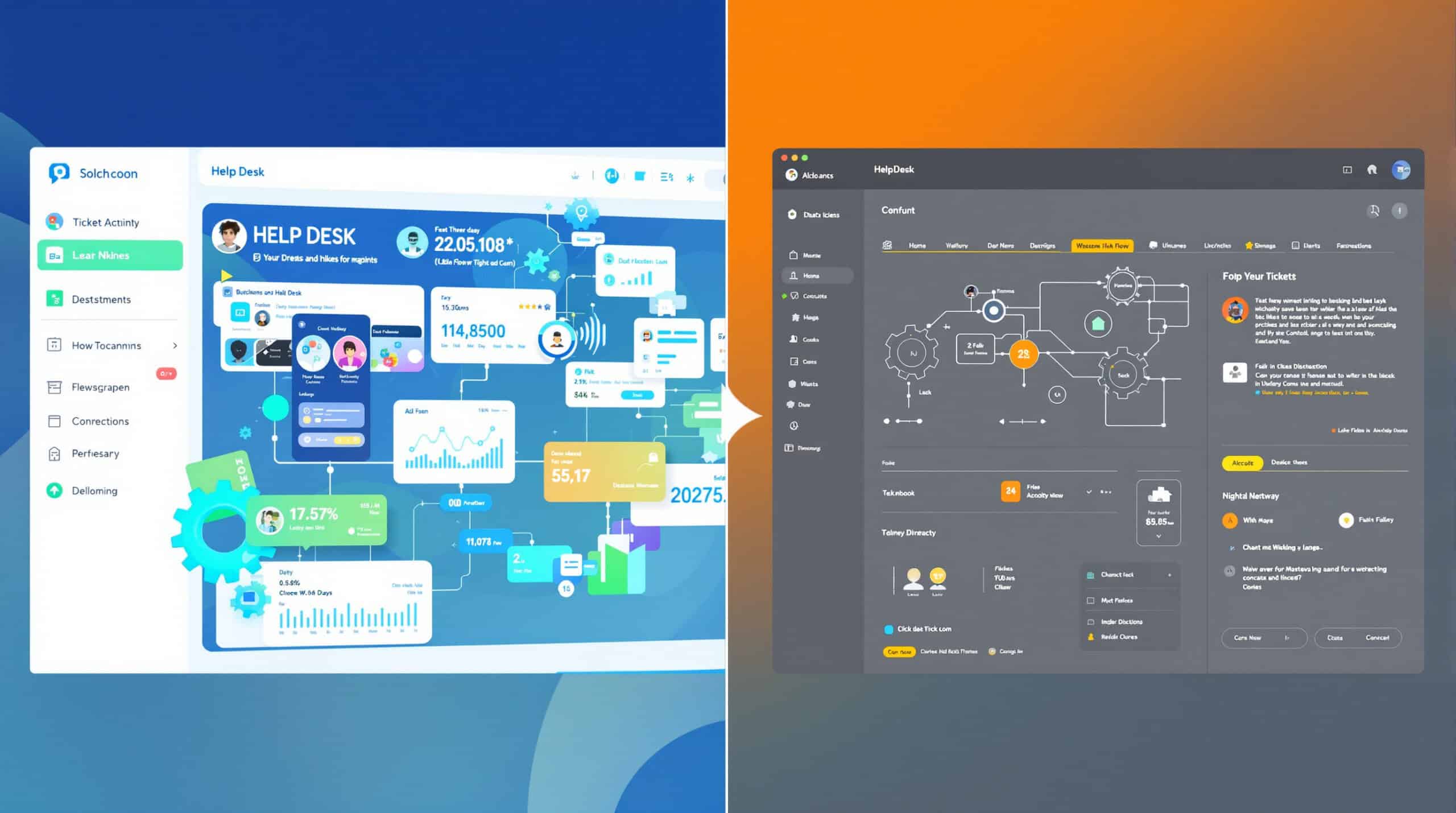
Freshdesk offers a range of plans from free to enterprise, making it a popular Jitbit alternative for growing teams.
Detailed Pricing Overview
Freshdesk pricing structure:
- Free Forever: Basic ticketing for up to 10 agents
- Growth: $15/agent/month – Adds automation and collaboration tools
- Pro: $49/agent/month – Includes advanced automation and reporting
- Enterprise: $79/agent/month – Enterprise security and advanced customization
- Freddy AI add-on: Additional $75/month for AI capabilities
Freshdesk’s free tier provides an accessible entry point, but costs can add up quickly when adding necessary features and AI capabilities.
Complete Features List
Core capabilities:
- Ticketing system with custom fields
- Knowledge base functionality
- Automation rules and workflows
- Team collaboration tools
- Reporting and analytics
- Mobile applications
- Freddy AI assistant (paid add-on)
How Freshdesk differs from Jitbit:
- Free tier availability
- More modern interface
- Stronger automation capabilities
- AI features (with add-on)
- No on-premise option
User Experiences and Reviews
Freshdesk users highlight:
- Easy setup and intuitive interface
- Useful free tier for small teams
- Effective automation capabilities
Common criticisms include:
- Limited customization options
- Additional costs for essential features
- Occasional performance issues
From Capterra: “Freshdesk’s free tier got us started quickly, but we soon needed to upgrade for essential features.”
From G2: “The automation capabilities save us significant time, though the AI add-on feels expensive for what it delivers.”
Advantages and Disadvantages
Advantages:
- Accessible free tier for small teams
- Intuitive interface with minimal training required
- Solid automation capabilities
- Good mobile applications
- Regular feature updates
Disadvantages:
- Limited customization compared to competitors
- AI capabilities require expensive add-on
- No on-premise deployment option
- Some performance issues with larger ticket volumes
- Support can be inconsistent
Our Subjective Assessment
During our testing, Freshdesk impressed us with its clean interface and straightforward setup process. The platform strikes a good balance between functionality and simplicity, making it accessible for teams transitioning from basic email support.
The free tier provides a good starting point, but most businesses will quickly need to upgrade to paid plans for essential features. The Freddy AI add-on, while powerful, feels overpriced compared to solutions like Talkees that include AI capabilities in their standard pricing.
For growing teams looking for a step up from Jitbit without significant complexity, Freshdesk offers a solid option, though the total cost may end up higher than initially expected once all necessary features are added.
Zoho Desk vs Jitbit: CRM-Powered Context and Cost Efficiency

Zoho Desk stands out for its deep integration with the broader Zoho ecosystem and robust workflow capabilities.
Detailed Pricing Overview
Zoho Desk pricing structure:
- Free: Basic ticketing for up to 3 agents
- Standard: $14/agent/month – Adds department management and automation
- Professional: $23/agent/month – Includes advanced workflow and reporting
- Enterprise: $40/agent/month – AI capabilities and advanced customization
- Discounts: Available for annual billing and larger teams
Zoho Desk offers competitive pricing, especially for organizations already using other Zoho products.
Complete Features List
Core capabilities:
- Ticketing with custom fields and workflows
- Knowledge base and community portal
- Automation rules and macros
- Reporting and analytics
- Zia AI assistant (higher tiers)
- Deep integration with Zoho CRM and other Zoho apps
- Mobile applications
How Zoho Desk differs from Jitbit:
- Stronger CRM integration
- More advanced workflow capabilities
- AI features on higher tiers
- More cost-effective for most use cases
- Part of a broader business software ecosystem
User Experiences and Reviews
Zoho Desk users appreciate:
- Seamless integration with other Zoho products
- Cost-effective pricing
- Powerful workflow capabilities
Common concerns include:
- Steeper learning curve than some alternatives
- Interface can feel cluttered
- Best value when using multiple Zoho products
From Capterra: “The CRM integration gives our agents complete customer context, significantly improving resolution times.”
From G2: “Excellent value for the price, though the interface takes some getting used to.”
Advantages and Disadvantages
Advantages:
- Excellent value for feature set
- Strong workflow automation capabilities
- Deep CRM integration
- Comprehensive reporting
- Part of broader Zoho ecosystem
Disadvantages:
- Interface can feel dated and complex
- Steeper learning curve than some alternatives
- Some advanced features only available on higher tiers
- Limited third-party integrations compared to competitors
- Best value when using other Zoho products
Our Subjective Assessment
When testing Zoho Desk, we were impressed by the depth of its workflow capabilities and the contextual customer information provided through CRM integration. For support teams that need to understand the complete customer relationship, this integration is invaluable.
The interface, while comprehensive, does require more time to learn than more modern alternatives like Talkees. However, for teams willing to invest in the learning curve, the platform offers exceptional value.
For organizations already using Zoho CRM or other Zoho products, Zoho Desk represents one of the most cost-effective Jitbit alternatives. For others, the value proposition depends on whether the powerful workflow capabilities outweigh the steeper learning curve.
Help Scout as a Jitbit Competitor: Email-First Simplicity and Human Support

Help Scout focuses on delivering a streamlined, email-centric support experience with an emphasis on personal customer interactions.
Detailed Pricing Overview
Help Scout pricing structure:
- Standard: $20/user/month – Core features for small teams
- Plus: $40/user/month – Advanced reporting and automation
- Pro: $65/user/month – Custom fields and advanced security
- Company: Custom pricing for larger organizations
- Add-ons: Additional costs for features like advanced security
Help Scout’s pricing is straightforward but can become expensive for larger teams requiring advanced features.
Complete Features List
Core capabilities:
- Shared inbox for email management
- Beacon live chat widget
- Knowledge base functionality
- Basic automation and workflows
- Reporting and analytics
- Customer profiles
- Mobile applications
How Help Scout differs from Jitbit:
- More modern, streamlined interface
- Stronger focus on personal, human-centric support
- Better knowledge base capabilities
- Less technical complexity
- Limited customization compared to Jitbit
User Experiences and Reviews
Help Scout users highlight:
- Clean, intuitive interface
- Excellent knowledge base functionality
- Focus on personal customer communication
Common criticisms include:
- Limited customization options
- Fewer integration options than competitors
- Less robust for complex support workflows
From G2: “Help Scout makes email support feel personal again – our customers notice the difference.”
From Capterra: “Perfect for email support, but limited when trying to scale to more complex support scenarios.”
Advantages and Disadvantages
Advantages:
- Clean, intuitive interface
- Excellent for email-centric support teams
- Strong knowledge base functionality
- Focus on personal customer communication
- Good documentation and support
Disadvantages:
- Limited customization options
- Fewer integrations than competitors
- Less suitable for complex support scenarios
- Can become expensive for larger teams
- Limited omnichannel capabilities
Our Subjective Assessment
During our testing, Help Scout stood out for its clean, intuitive interface and focus on personal customer interactions. The platform excels at making email support feel human and personal, which can be a significant advantage for brands focused on customer relationships.
The implementation was straightforward, with minimal training required for agents. The knowledge base functionality is particularly strong, making it easy to create and maintain helpful self-service content.
For teams primarily focused on email support who value simplicity and personal communication over complex features, Help Scout offers a compelling alternative to Jitbit. However, organizations requiring extensive customization or robust omnichannel support may find its capabilities limiting compared to alternatives like Talkees.
HappyFox vs Jitbit: Clean UI and Strong Automation Packs

HappyFox offers a clean user interface combined with powerful automation capabilities, making it a popular Jitbit alternative.
Detailed Pricing Overview
HappyFox pricing structure:
- Mighty: $39/agent/month – Core ticketing and knowledge base
- Fantastic: $59/agent/month – Adds advanced automation and reporting
- Enterprise: $79/agent/month – Includes custom fields and advanced security
- Enterprise Plus: $99/agent/month – Enterprise-grade features and support
- Add-ons: Additional costs for chat, voice, and specialized integrations
HappyFox’s pricing is higher than some alternatives but includes robust features in each tier.
Complete Features List
Core capabilities:
- Ticketing system with custom fields
- Knowledge base and self-service portal
- Smart Rules automation engine
- Reporting and analytics
- Multi-channel support
- Asset management
- Mobile applications
How HappyFox differs from Jitbit:
- More intuitive user interface
- Stronger automation capabilities
- Better knowledge base functionality
- More comprehensive reporting
- No on-premise option
User Experiences and Reviews
HappyFox users appreciate:
- Clean, intuitive interface
- Powerful Smart Rules automation
- Comprehensive reporting
- Strong knowledge base functionality
Common concerns include:
- Higher price point than some alternatives
- Limited customization on lower tiers
- Additional costs for chat and voice capabilities
From G2: “The Smart Rules automation has reduced our ticket handling time by nearly 30%.”
From Trustpilot: “Clean interface and powerful reporting, though the price is higher than we initially expected.”
Advantages and Disadvantages
Advantages:
- Clean, intuitive user interface
- Powerful automation capabilities
- Strong reporting and analytics
- Comprehensive knowledge base functionality
- Good mobile applications
Disadvantages:
- Higher price point than many competitors
- Additional costs for chat and voice features
- No on-premise deployment option
- Limited customization on lower tiers
- Can be overkill for simple support needs
Our Subjective Assessment
When testing HappyFox, we were impressed by its clean interface and powerful automation capabilities. The Smart Rules engine is particularly effective, allowing for complex automation sequences without requiring technical expertise.
The implementation process was straightforward, with good documentation and support. The reporting capabilities provide excellent insights into support performance and trends.
For teams looking for a balance of usability and power, HappyFox offers a strong alternative to Jitbit, though at a higher price point than some competitors. The automation capabilities can deliver significant time savings, potentially justifying the higher cost for teams with complex support workflows.
Kayako as a Jitbit Alternative: Unified Customer Timeline with Legacy Strengths

Kayako offers a unified customer timeline approach to support, combining traditional ticketing with modern customer experience capabilities.
Detailed Pricing Overview
Kayako pricing structure:
- Inbox: $30/agent/month – Basic ticketing and customer timeline
- Growth: $60/agent/month – Adds automation and reporting
- Scale: $100/agent/month – Enterprise features and advanced customization
- Discounts: Available for annual billing
- Add-ons: Additional costs for advanced integrations and specialized features
Kayako’s pricing is positioned in the mid-to-high range compared to other Jitbit alternatives.
Complete Features List
Core capabilities:
- Unified customer timeline
- Ticketing with custom fields
- Knowledge base functionality
- Automation and workflows
- Reporting and analytics
- Live chat capabilities
- Mobile applications
How Kayako differs from Jitbit:
- Unified customer timeline approach
- Stronger focus on customer context
- Better live chat capabilities
- More modern interface
- No on-premise option
User Experiences and Reviews
Kayako users highlight:
- Unified customer view across channels
- Effective live chat functionality
- Good automation capabilities
Common criticisms include:
- Steeper learning curve than some alternatives
- Higher price point
- Some performance issues with larger ticket volumes
From G2: “The unified timeline gives us complete context for each customer interaction.”
From Capterra: “Powerful features but requires more setup time than we expected.”
Advantages and Disadvantages
Advantages:
- Unified customer timeline provides complete context
- Strong live chat capabilities
- Good automation features
- Effective knowledge base functionality
- Focus on customer experience
Disadvantages:
- Higher price point than many competitors
- Steeper learning curve
- Some performance issues with scale
- Limited customization on lower tiers
- No on-premise deployment option
Our Subjective Assessment
During our testing of Kayako, the unified customer timeline stood out as a particularly valuable feature, providing agents with complete context for each interaction. This approach significantly improves the customer experience by eliminating the need to repeat information.
The implementation required more time than some alternatives, with a steeper learning curve for administrators. However, once configured, the system provides a comprehensive view of customer interactions that many competitors lack.
For organizations prioritizing customer experience and context across channels, Kayako offers compelling advantages over Jitbit, though at a higher price point and with more implementation complexity than some alternatives like Talkees.
Jira Service Management vs Jitbit: ITSM, CMDB, and Developer-Grade Workflows

Jira Service Management brings Atlassian’s workflow expertise to IT service management, offering a powerful alternative to Jitbit for technical teams.
Detailed Pricing Overview
Jira Service Management pricing structure:
- Standard: $20/agent/month – Basic ITSM capabilities
- Premium: $45/agent/month – Advanced workflows and reporting
- Enterprise: Custom pricing – Enterprise-grade features and support
- Data Center: Self-hosted option with annual licensing
- Free tier: Available for up to 3 agents
Jira Service Management offers competitive pricing for its ITSM capabilities, with both cloud and self-hosted options.
Complete Features List
Core capabilities:
- IT service management workflows
- Configuration management database (CMDB)
- Change management
- Problem management
- Knowledge base
- Automation rules
- Deep integration with Jira Software and other Atlassian products
- Self-service portal
How Jira Service Management differs from Jitbit:
- Stronger ITSM capabilities
- Better integration with development workflows
- More robust change management
- Advanced configuration options
- Available in both cloud and self-hosted options
User Experiences and Reviews
Jira Service Management users appreciate:
- Deep integration with development tools
- Powerful workflow capabilities
- Robust ITSM features
- Flexibility for customization
Common concerns include:
- Complexity for non-technical users
- Steep learning curve
- Can be overwhelming for simple support needs
From G2: “Perfect for technical support teams, especially those already using Jira Software.”
From Capterra: “Powerful but complex – requires dedicated administration resources.”
Advantages and Disadvantages
Advantages:
- Comprehensive ITSM capabilities
- Strong integration with development workflows
- Powerful customization options
- Available in both cloud and self-hosted options
- Robust change and problem management
Disadvantages:
- Complex for non-technical users
- Steep learning curve
- Requires dedicated administration
- Can be overwhelming for simple support needs
- Less suitable for customer-facing support
Our Subjective Assessment
When testing Jira Service Management, we found its ITSM capabilities to be exceptionally powerful, particularly for organizations that already use other Atlassian products. The platform excels at managing complex technical workflows and change management processes.
The implementation process was complex, requiring significant configuration and training. This is not a platform that can be quickly deployed without dedicated resources.
For IT teams and organizations with strong technical requirements, Jira Service Management offers advantages over Jitbit in terms of workflow depth and integration with development processes. However, for customer-facing support teams or those seeking simplicity, alternatives like Talkees provide a more accessible experience.
ServiceDesk Plus (ManageEngine) as a Jitbit Competitor: ITIL Processes and Asset Management

ServiceDesk Plus offers comprehensive IT service management with a focus on ITIL processes and asset management.
Detailed Pricing Overview
ServiceDesk Plus pricing structure:
- Standard: $995 for 10 technicians (one-time) – Basic help desk
- Professional: $1,195 for 10 technicians (one-time) – Adds asset management
- Enterprise: $2,995 for 10 technicians (one-time) – Full ITIL processes
- Cloud options: Subscription-based alternatives to one-time licensing
- MSP Edition: Special pricing for managed service providers
ServiceDesk Plus offers both one-time licensing and subscription options, with pricing based on technician count.
Complete Features List
Core capabilities:
- IT service management workflows
- Asset management
- Change management
- Problem management
- Configuration management database
- Service catalog
- Knowledge base
- Reporting and analytics
- Mobile applications
How ServiceDesk Plus differs from Jitbit:
- Stronger ITIL alignment
- More comprehensive asset management
- Better change and configuration management
- More robust reporting for IT assets
- Available in both cloud and on-premise options
User Experiences and Reviews
ServiceDesk Plus users highlight:
- Comprehensive asset management
- Strong ITIL process support
- Effective reporting capabilities
Common criticisms include:
- Dated interface compared to modern alternatives
- Complexity for simple support needs
- Steep learning curve
From G2: “Excellent for IT departments that need strong asset management alongside ticketing.”
From Capterra: “Comprehensive ITIL support, though the interface feels outdated compared to newer platforms.”
Advantages and Disadvantages
Advantages:
- Comprehensive ITIL process support
- Strong asset management capabilities
- Available in both cloud and on-premise options
- Robust reporting for IT assets
- Good value for ITSM features
Disadvantages:
- Dated interface compared to modern alternatives
- Complex implementation for simple support needs
- Steep learning curve
- Less suitable for customer-facing support
- Can be overwhelming for small teams
Our Subjective Assessment
During our testing of ServiceDesk Plus, the asset management capabilities stood out as particularly strong, providing comprehensive tracking and reporting for IT assets. The ITIL process support is also excellent, making it a good fit for IT departments with formal service management requirements.
The interface, while functional, feels dated compared to more modern alternatives like Talkees. The implementation required significant configuration and training, making it less suitable for teams seeking a quick deployment.
For IT departments prioritizing asset management and ITIL processes, ServiceDesk Plus offers advantages over Jitbit. However, for customer-facing support or teams seeking a modern, intuitive interface, alternatives like Talkees provide a better experience.
SysAid vs Jitbit: Mid-Market ITSM with Automation and Asset Management

SysAid targets mid-market organizations with a blend of ITSM capabilities, automation, and asset management.
Detailed Pricing Overview
SysAid pricing structure:
- Basic: Starting around $1,200/year for 100 assets – Core help desk
- Full: Starting around $2,400/year for 100 assets – Adds ITSM and asset management
- Premium: Custom pricing – Enterprise features and advanced customization
- Cloud and on-premise options: Available at different price points
SysAid’s pricing is based on both technician count and asset count, with both cloud and on-premise options.
Complete Features List
Core capabilities:
- IT service management workflows
- Asset management
- Change management
- Problem management
- Knowledge base
- Automation and workflows
- Reporting and analytics
- Mobile applications
How SysAid differs from Jitbit:
- More comprehensive ITSM capabilities
- Stronger asset management
- Better automation for IT processes
- More robust reporting for assets
- Available in both cloud and on-premise options
User Experiences and Reviews
SysAid users appreciate:
- Balanced ITSM capabilities for mid-market organizations
- Effective asset management
- Good automation capabilities
Common concerns include:
- Interface less intuitive than some alternatives
- Complexity for simple support needs
- Pricing structure can be confusing
From G2: “Good balance of features for mid-sized IT departments without the enterprise complexity.”
From Capterra: “Effective asset management and automation, though the interface could be more intuitive.”
Advantages and Disadvantages
Advantages:
- Comprehensive ITSM capabilities for mid-market
- Strong asset management
- Good automation features
- Available in both cloud and on-premise options
- Solid reporting capabilities
Disadvantages:
- Less intuitive interface than modern alternatives
- Complex for simple support needs
- Pricing structure can be confusing
- Less suitable for customer-facing support
- Requires dedicated administration
Our Subjective Assessment
When testing SysAid, we found it offers a good balance of ITSM capabilities for mid-market organizations without the overwhelming complexity of enterprise solutions. The asset management and automation capabilities are particularly strong, providing good value for IT departments.
The interface, while comprehensive, is less intuitive than more modern alternatives, requiring more training for new users. The implementation process was moderately complex, requiring dedicated resources but less than enterprise-grade solutions.
For mid-sized IT departments seeking a balance of ITSM capabilities and asset management, SysAid offers advantages over Jitbit. However, for customer-facing support or teams prioritizing a modern user experience, alternatives like Talkees provide a more accessible solution.
Side-by-Side Jitbit Comparison: Features, Pricing, and Capabilities

When comparing Jitbit to its alternatives, several key dimensions stand out:
AI and Chatbot Capabilities
- Talkees: Native AI chatbot with natural language understanding; included in standard plans
- Zendesk: AI capabilities available as add-ons at higher price points
- Freshdesk: Freddy AI available as a separate add-on
- Jitbit: Limited automation; lacks advanced AI capabilities
Channel Support
- Talkees: Unified inbox for email, chat, social, and voice
- Zendesk: Comprehensive omnichannel support
- HappyFox: Multi-channel support with add-ons for chat and voice
- Jitbit: Primarily email-focused with limited channel integration
Automation and Workflows
- Talkees: No-code workflow builder with advanced automation
- HappyFox: Smart Rules automation engine
- Zoho Desk: Robust workflow capabilities
- Jitbit: Basic automation rules
Pricing Models
- Talkees: Flexible per-agent pricing with included AI
- Freshdesk: Free tier available; paid plans from $15/agent/month
- Zendesk: Higher price points starting at $49/agent/month
- Jitbit: Both subscription and one-time license options
Decision Checklist for Choosing a Jitbit Alternative

Consider these factors when selecting the right Jitbit alternative for your organization:
Requirements Mapping
- What channels do you need to support? (Email, chat, social, voice)
- How important is AI automation for your support strategy?
- Do you need asset management capabilities?
- What level of reporting and analytics do you require?
- How many agents need access to the system?
Security and Compliance
- What are your data residency requirements?
- Do you need specific compliance certifications (GDPR, HIPAA, SOC2)?
- Is cloud deployment acceptable, or do you need on-premise options?
- What authentication methods do you require (SSO, MFA)?
Migration Effort
- How complex is your current Jitbit implementation?
- How many historical tickets need to be migrated?
- What integrations need to be reconfigured?
- What is your timeline for migration?
Total Cost of Ownership
- What is your per-agent budget?
- Are there additional costs for essential features or add-ons?
- What implementation and training costs should you anticipate?
- How does pricing scale as your team grows?
Conclusion: Finding Your Ideal Jitbit Alternative

After comprehensive analysis of the top Jitbit alternatives, several clear options emerge depending on your specific needs:
- For AI-first omnichannel support: Talkees offers the most compelling combination of modern AI capabilities, unified channel support, and intuitive interface at a competitive price point.
- For enterprise-grade requirements: Zendesk provides comprehensive features and marketplace depth, though at a higher price point.
- For free tier availability: Freshdesk offers a viable free option for small teams, with scalable paid plans as you grow.
- For CRM integration: Zoho Desk delivers excellent value, especially for organizations already in the Zoho ecosystem.
- For IT departments with ITSM needs: Jira Service Management, ServiceDesk Plus, or SysAid provide specialized capabilities for technical support teams.
When evaluating these alternatives, consider not just current needs but how your support requirements will evolve. The right choice balances immediate functionality with room to grow, ensuring your help desk can scale with your business.
For most organizations seeking a modern alternative to Jitbit, Talkees represents the optimal balance of advanced AI capabilities, intuitive interface, and flexible pricing, making it our top recommendation for teams looking to upgrade their customer support technology.